Body & Ballot
When given the freedom to choose a social issue, the choice was clear. This project became an opportunity to use design as advocacy — to amplify the conversation around women's bodily autonomy and respond to the Supreme Court's overturning of Roe v. Wade with intention, urgency, and care.
The result is Body & Ballot, a three-piece print campaign that meets its audience across different moments of engagement. A cross-fold brochure explores the intersection of reproductive rights and political power, tracing how policy shapes the most personal of decisions. A civil engagement resource card equips readers with the tools to protest peacefully and participate meaningfully in democracy. And a ticket to the Brooklyn Museum's exhibition Ain’t I a Women invites them deeper — into the long, often suppressed history of reproductive injustice in the United States.
Each piece serves a different purpose: to inform, to mobilize, to provoke. Together, they form a cohesive call to awareness and action.
01: Cross-Fold Brochure
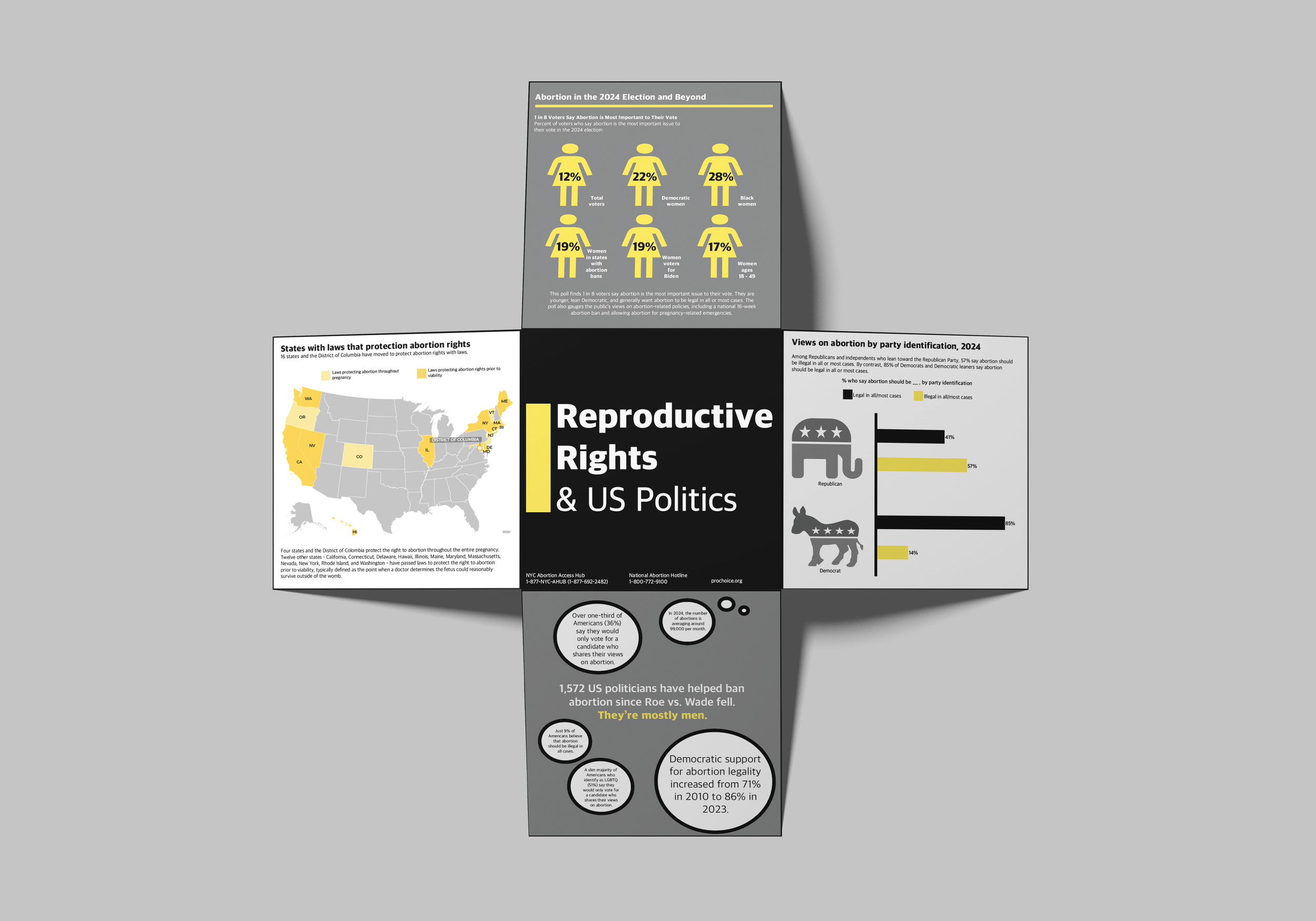
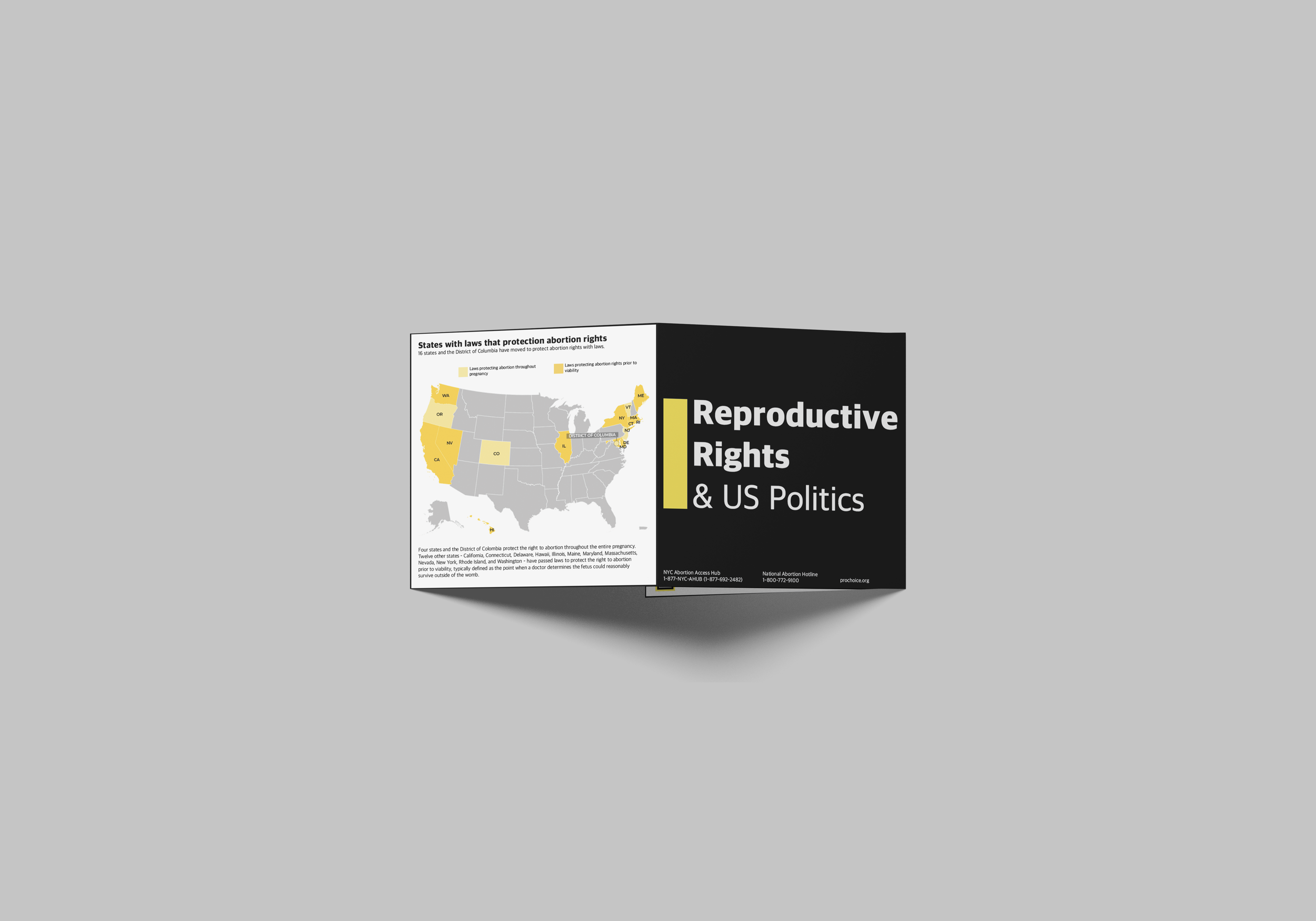
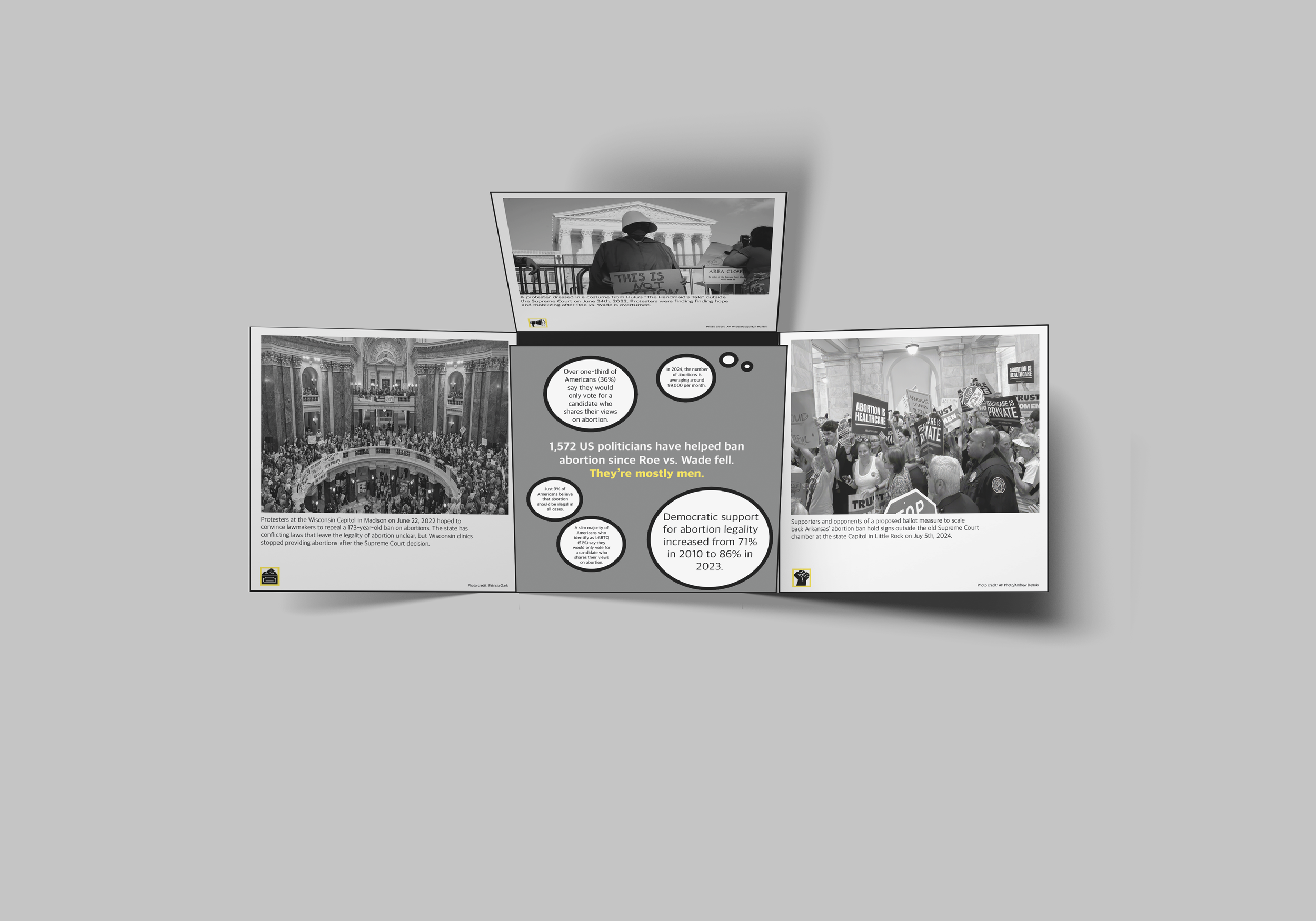
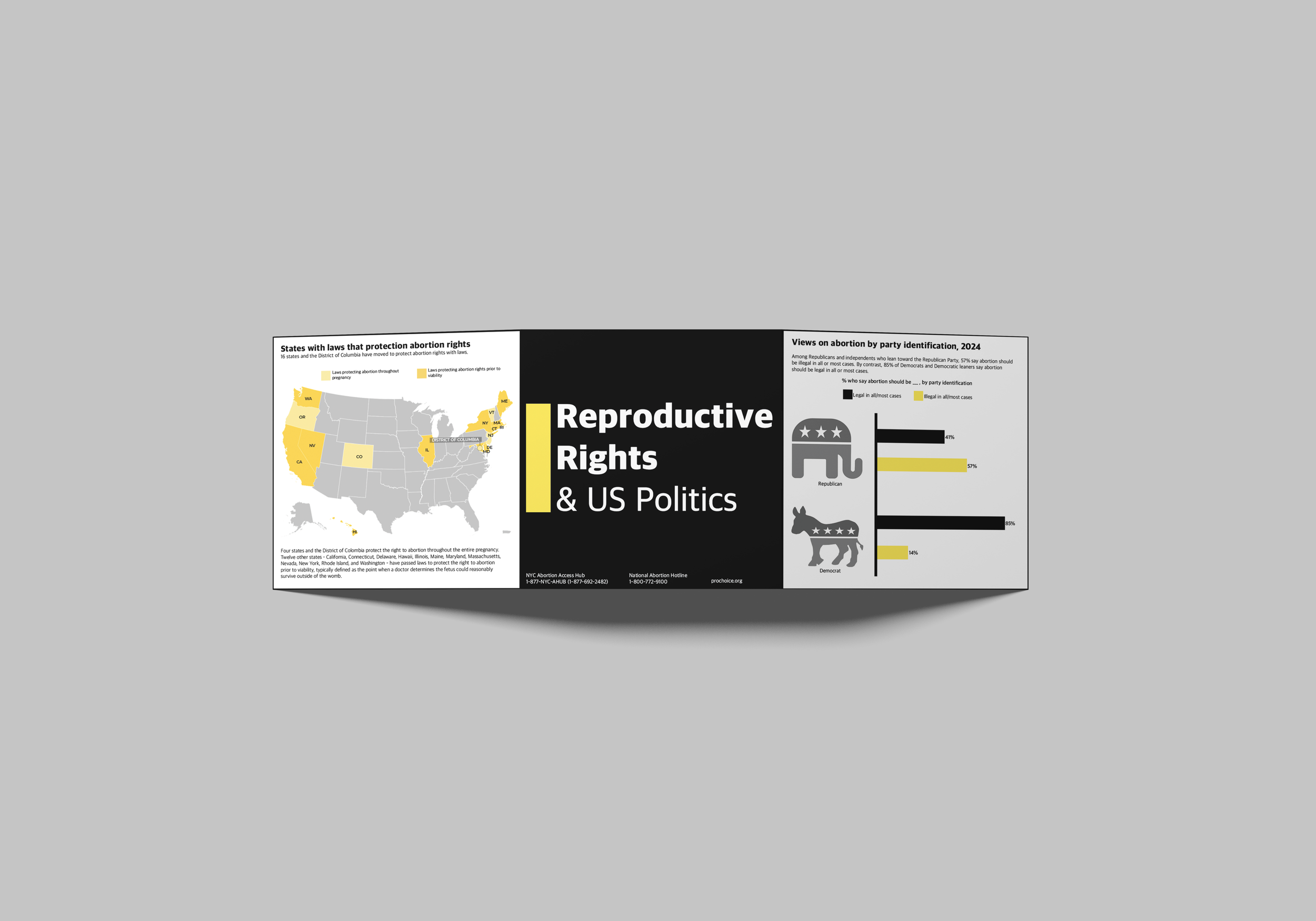
The brochure acts as the campaign's informational anchor, condensing political data into an accessible, visually driven reading experience. Designed in a cross-fold format, the layout unfolds to reveal six panels — each dedicated to a distinct facet of the reproductive rights landscape, from state-by-state legal protections to party-line polling data and the outsized role abortion played in the 2024 election.
02: Civil Engagement
Resource Card
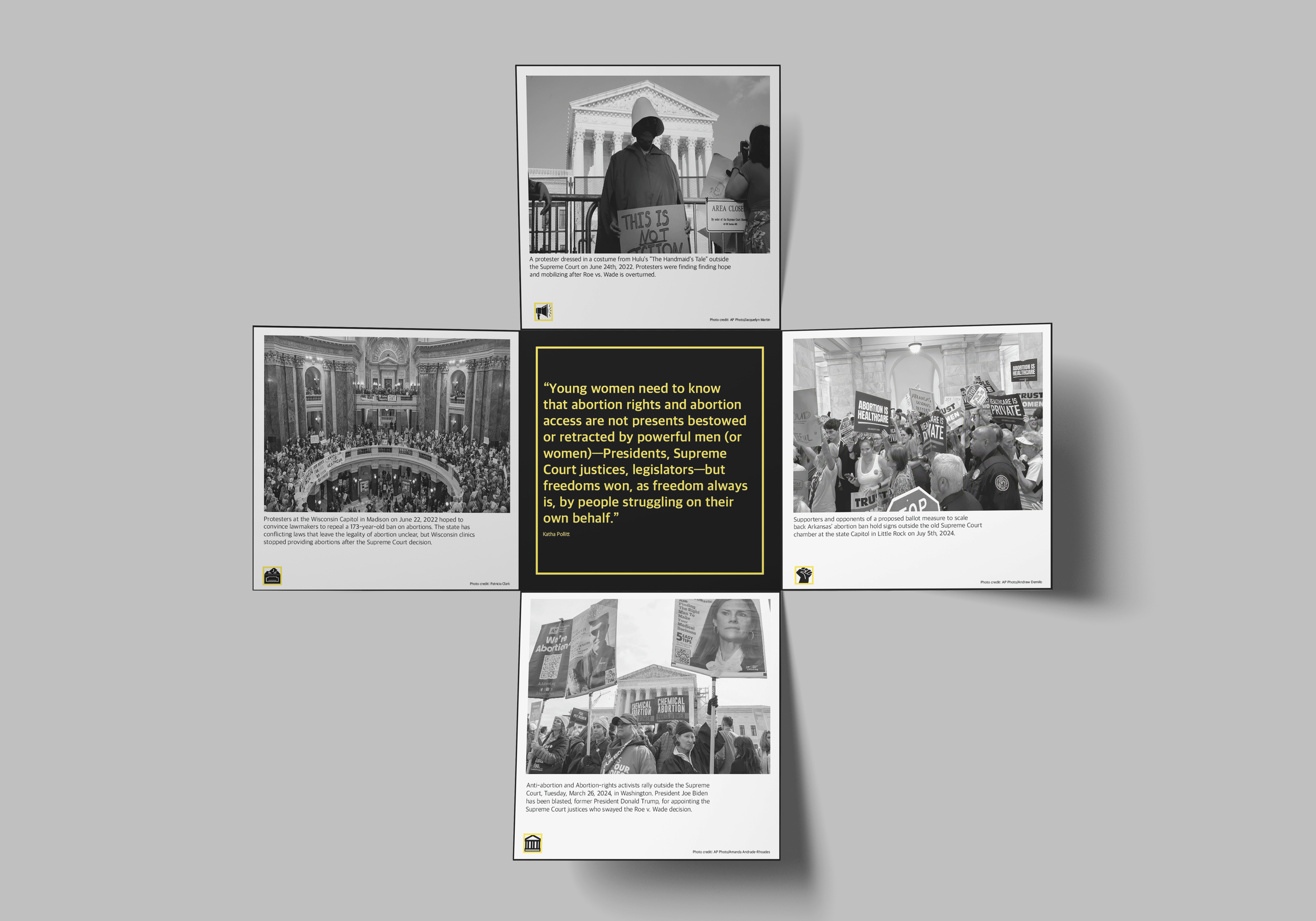
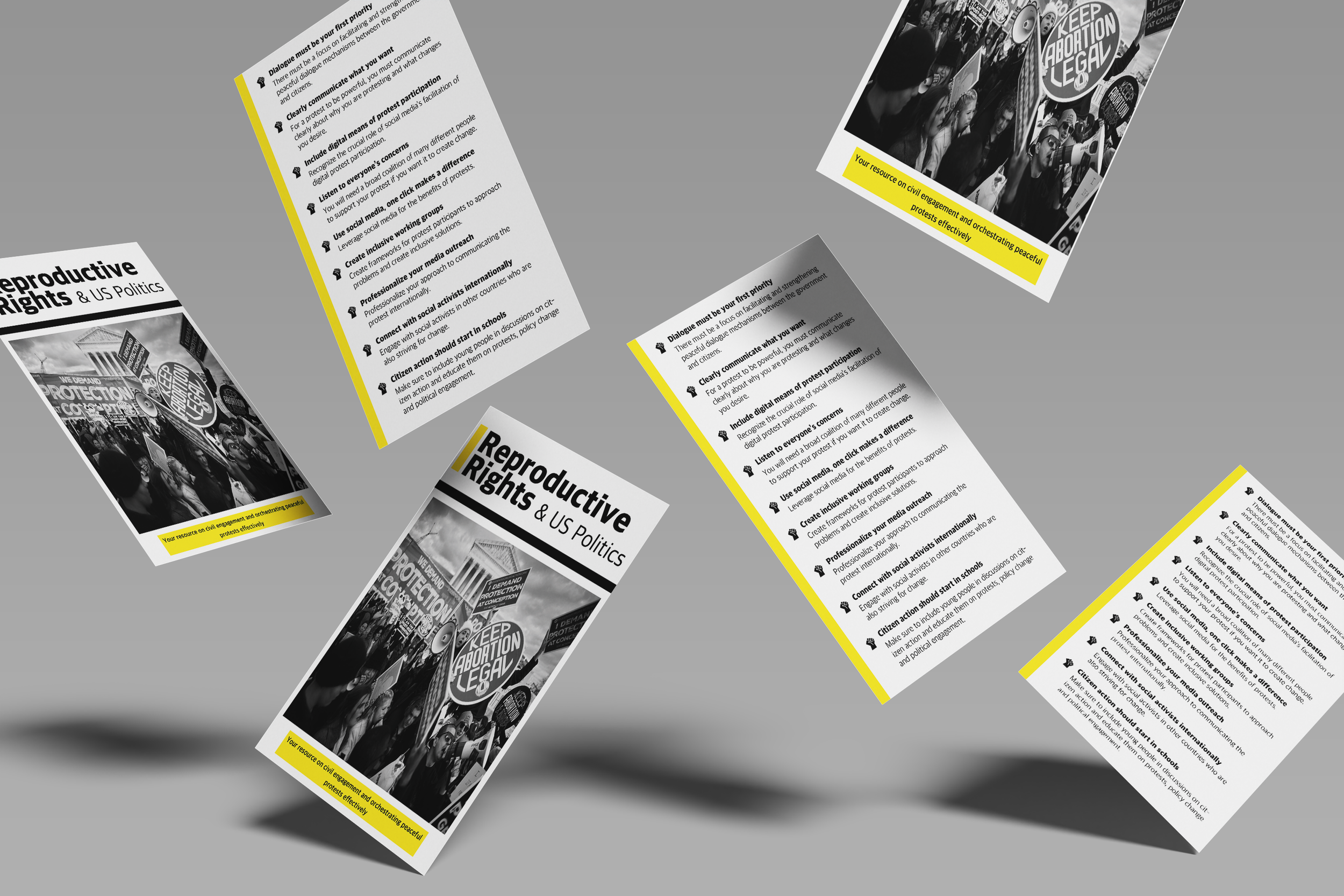
Where the brochure informs, the resource card mobilizes. Designed as a compact, practical reference, it communicates nine principles of effective peaceful protest into a format readers can carry with them — to a rally, a town hall, or a conversation.
The tone throughout is directive and empowering — this is a tool, designed to be used.
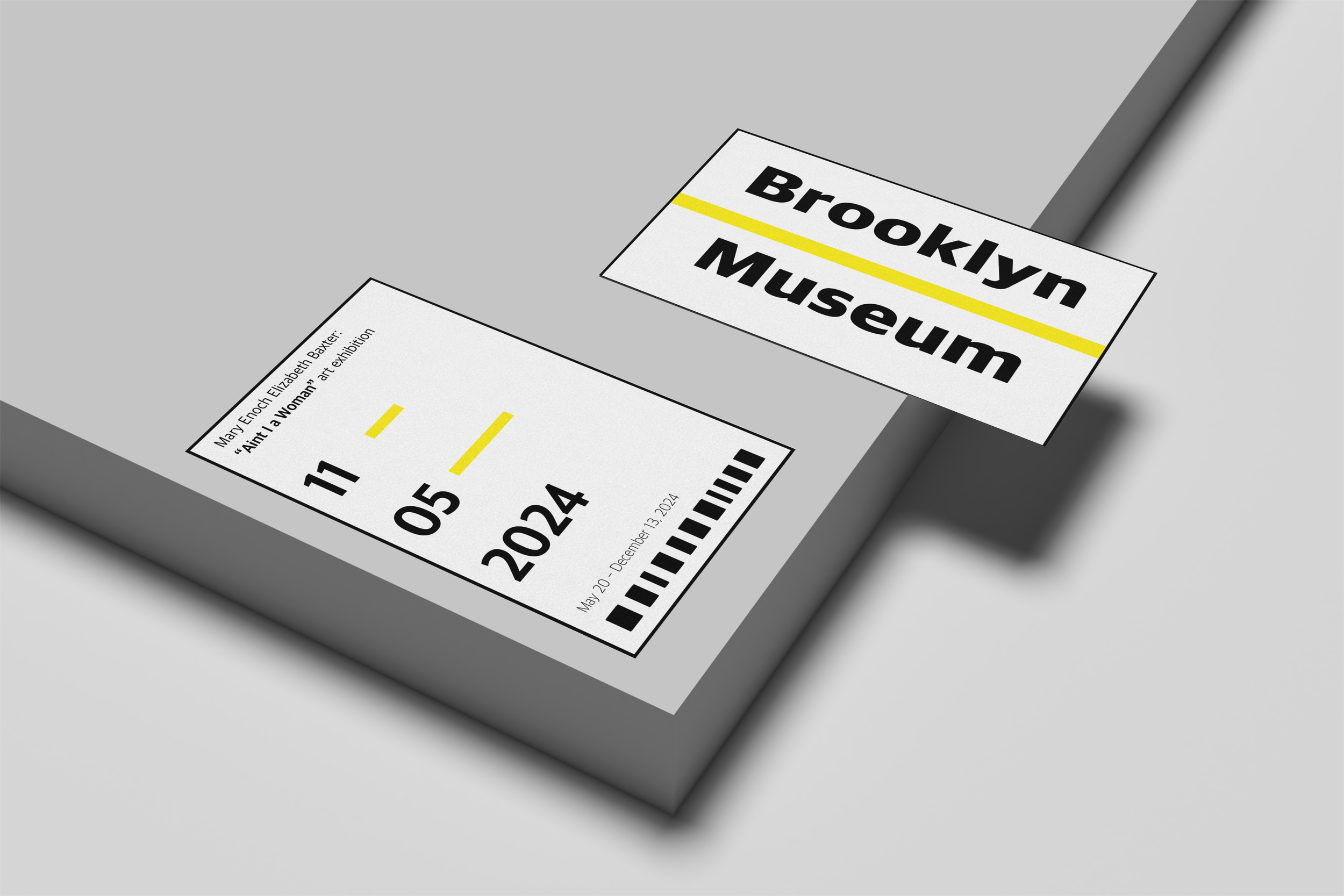
03: Brooklyn Museum Exhibition Ticket
The ticket bridges the campaign's print materials with a real-world cultural institution, lending the work additional authority and context. Designed for Mary Enoch Elizabeth Baxter's "Ain't I a Woman" exhibition at the Brooklyn Museum — a show examining the long history of reproductive injustice in the United States — the four-piece ticket system demonstrates how a consistent visual identity flexes across varied formats.