The Frame
The Frame
Senior Thesis
The news doesn't lie. It selects. It emphasizes. It omits. And in doing so, it shapes not just what we know — but how we feel about what we know.
The Frame is my senior thesis project in typography and editorial design that makes this invisible process visible. Through a 12-page newspaper, a series of typographic posters, postcards, and an interactive headline mechanism, the project invites the general public to confront a disquieting truth: that distortion doesn't require false information. It only requires the right word in the right place.
The Newspaper
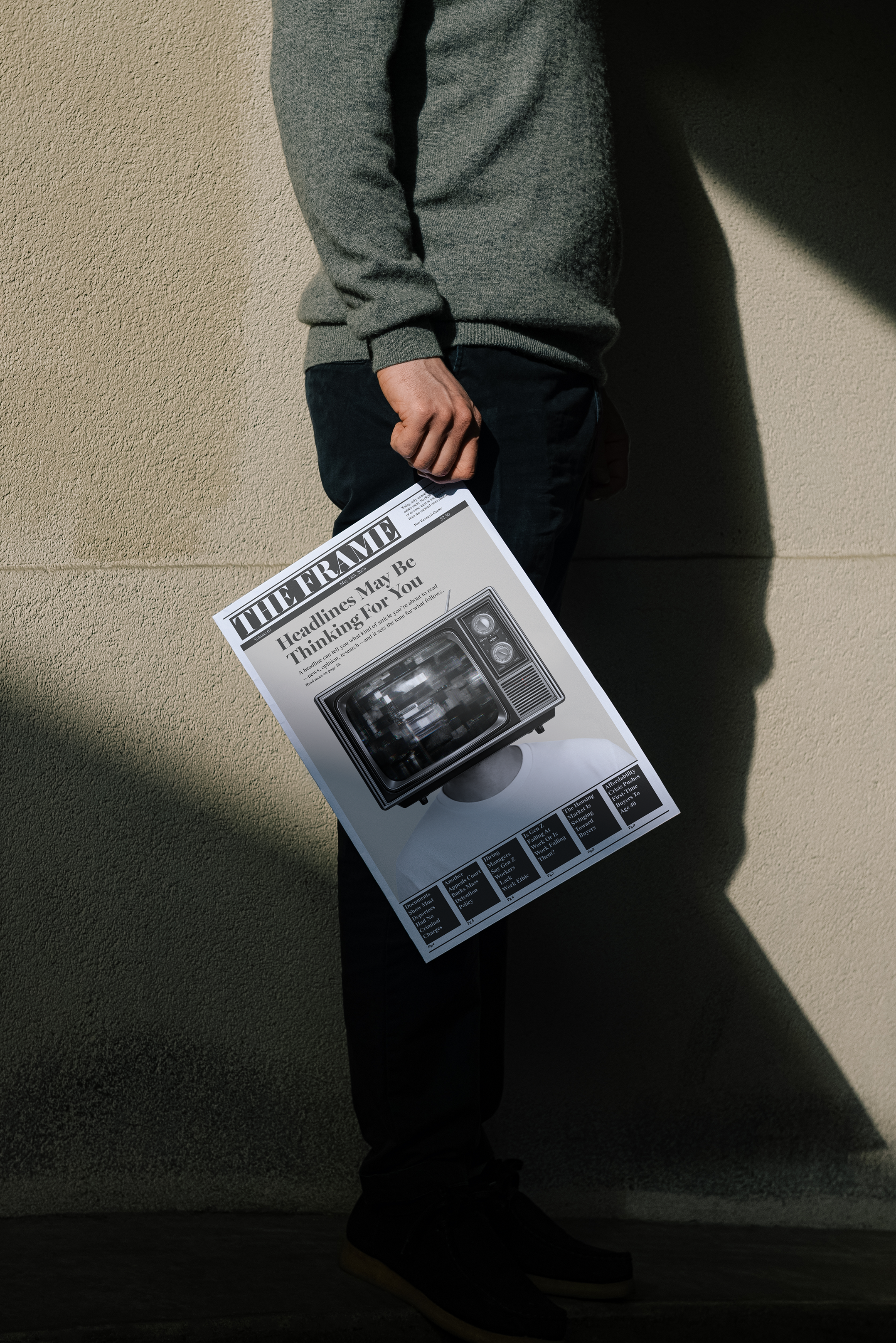
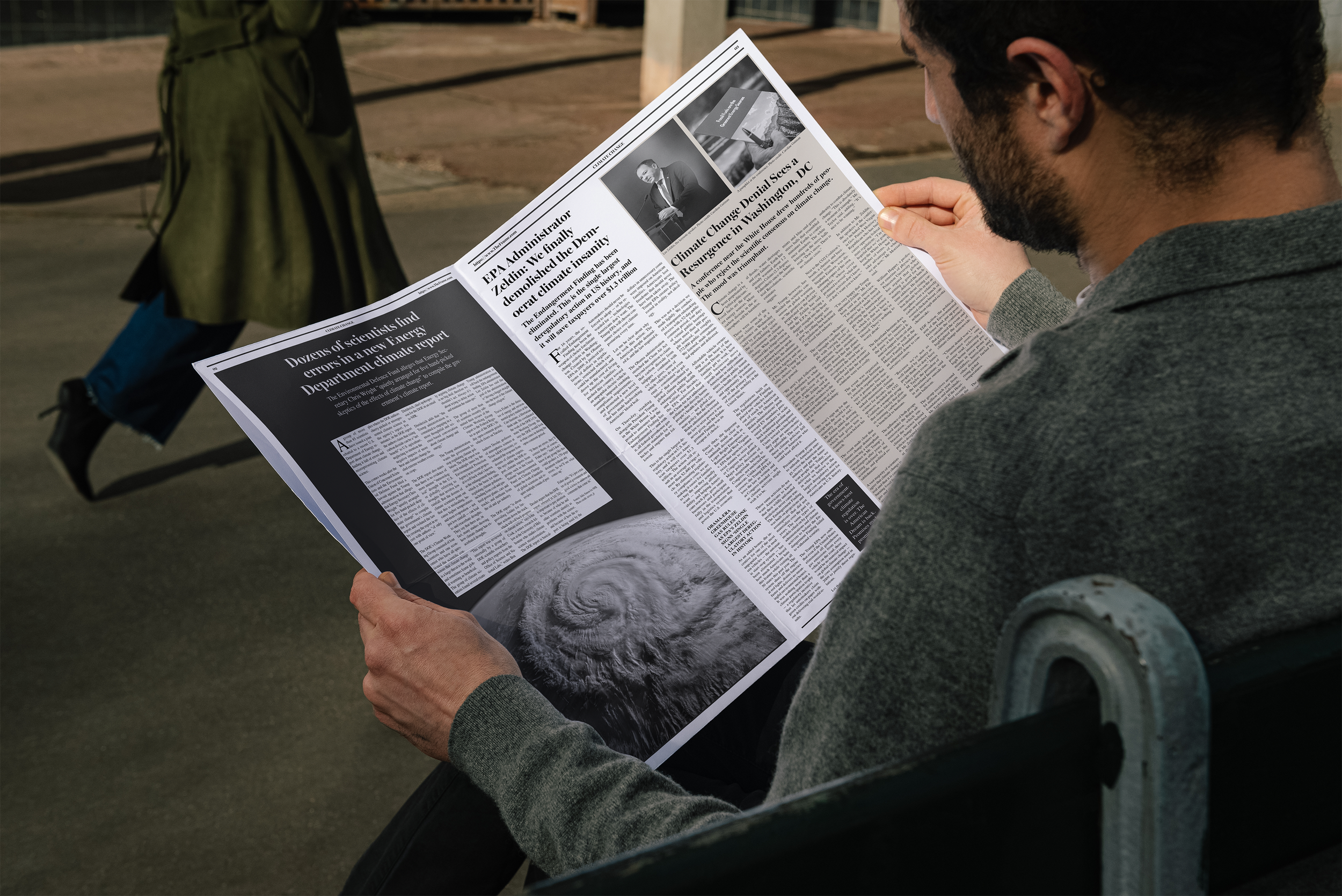
The newspaper is my thesis made tangible. Across 12 pages, the same topic appears twice — reported, designed, and framed in opposing ways. The facts don't change. The language does. And with it, so does meaning.
The juxtapositions are deliberate. A headline softened becomes a story minimized. A word swapped shifts blame, assigns virtue, or erases consequence entirely. Readers moving through the publication are invited to notice the moment the narrative tilts — and to sit with the discomfort of realizing how easily it happens.
Typographically, the newspaper draws from the conventions of legitimate print journalism, using familiar editorial structures. The design does not signal which version to trust. That ambiguity is the point.
The Posters
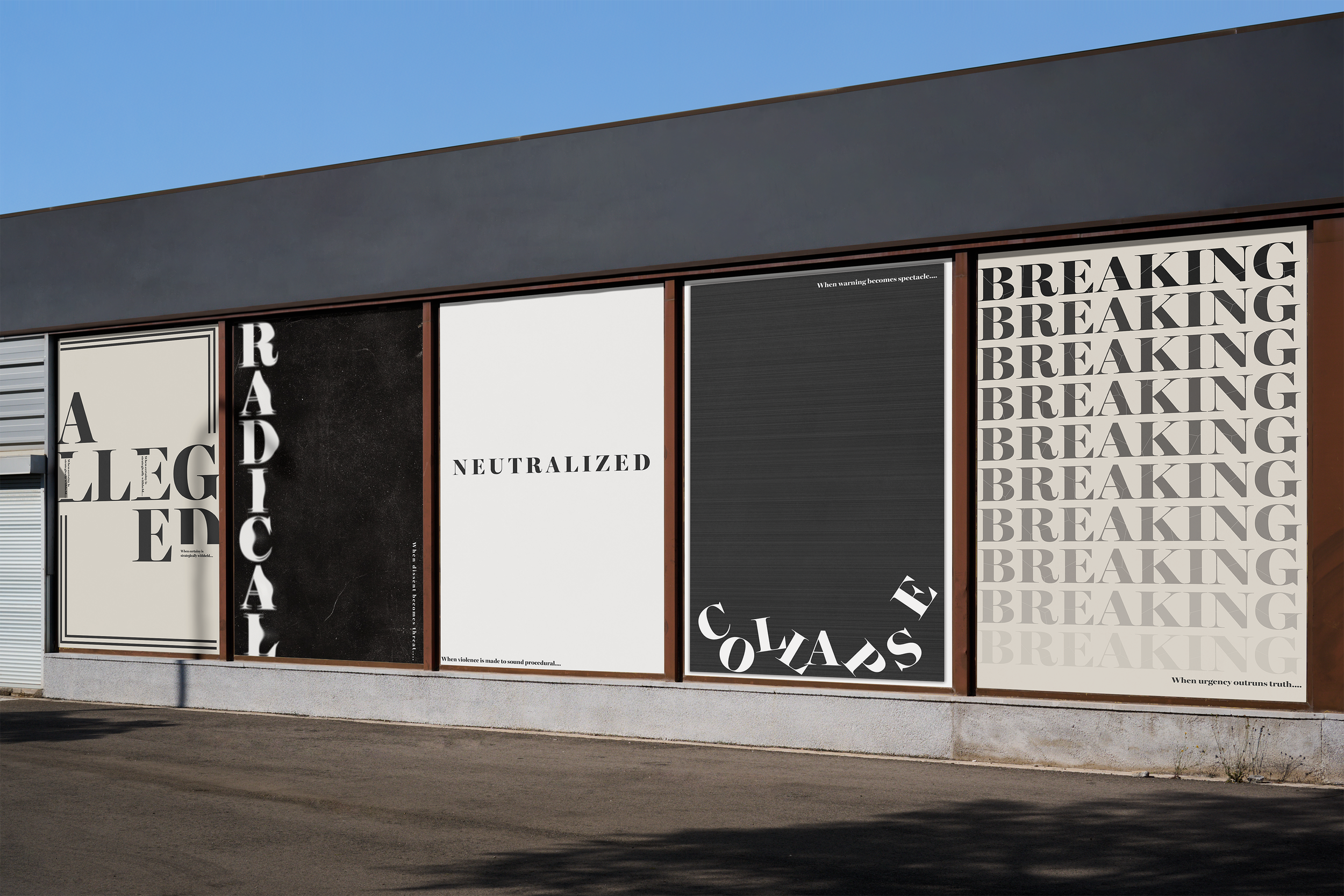
The typographic poster series condences my project's central argument to its most elemental form. Single headlines — stripped of image, context, and supporting copy — are presented in isolation, their framing laid bare. Without the surrounding structure of a newspaper, there is nowhere to look but the words themselves.
The Postcards
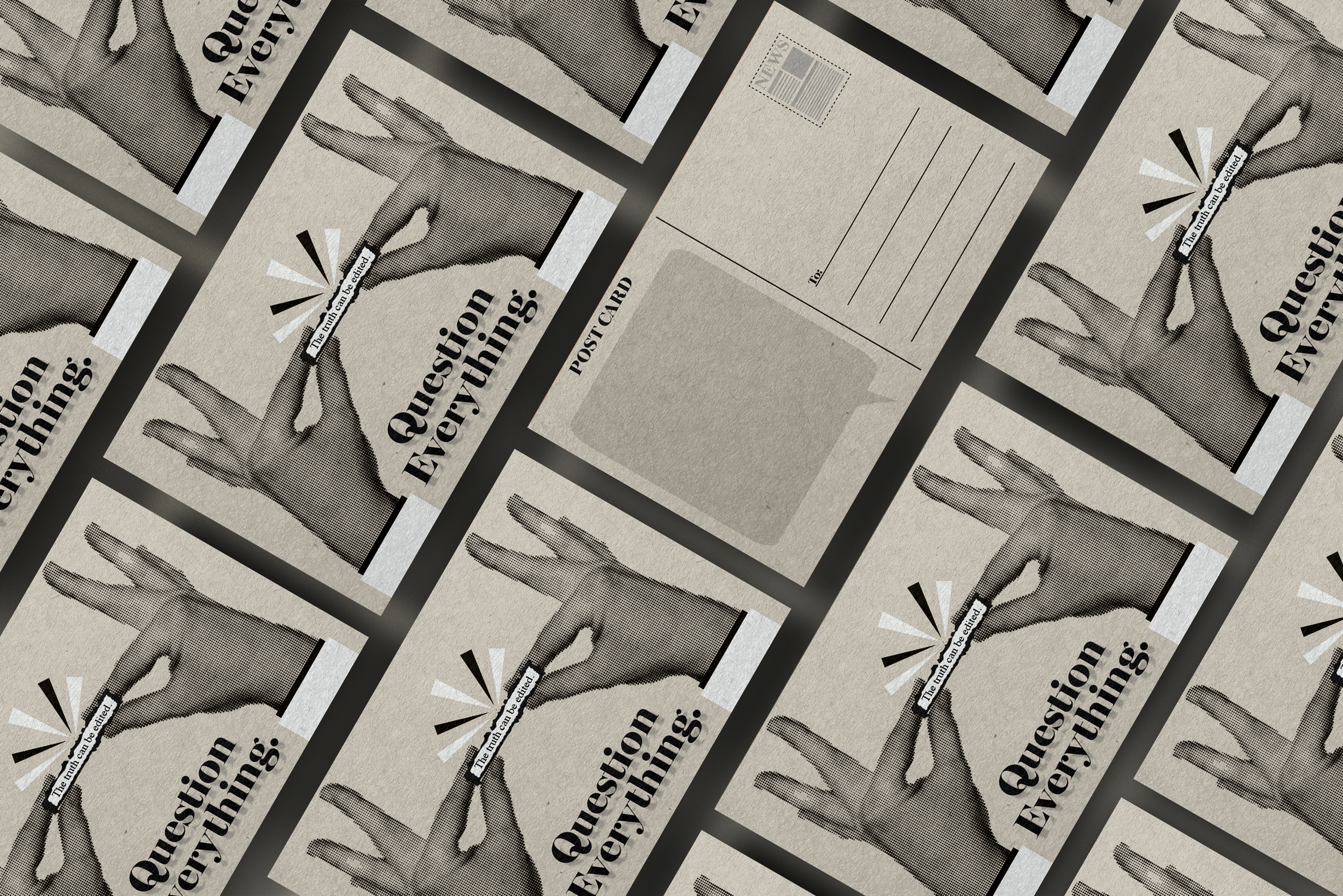
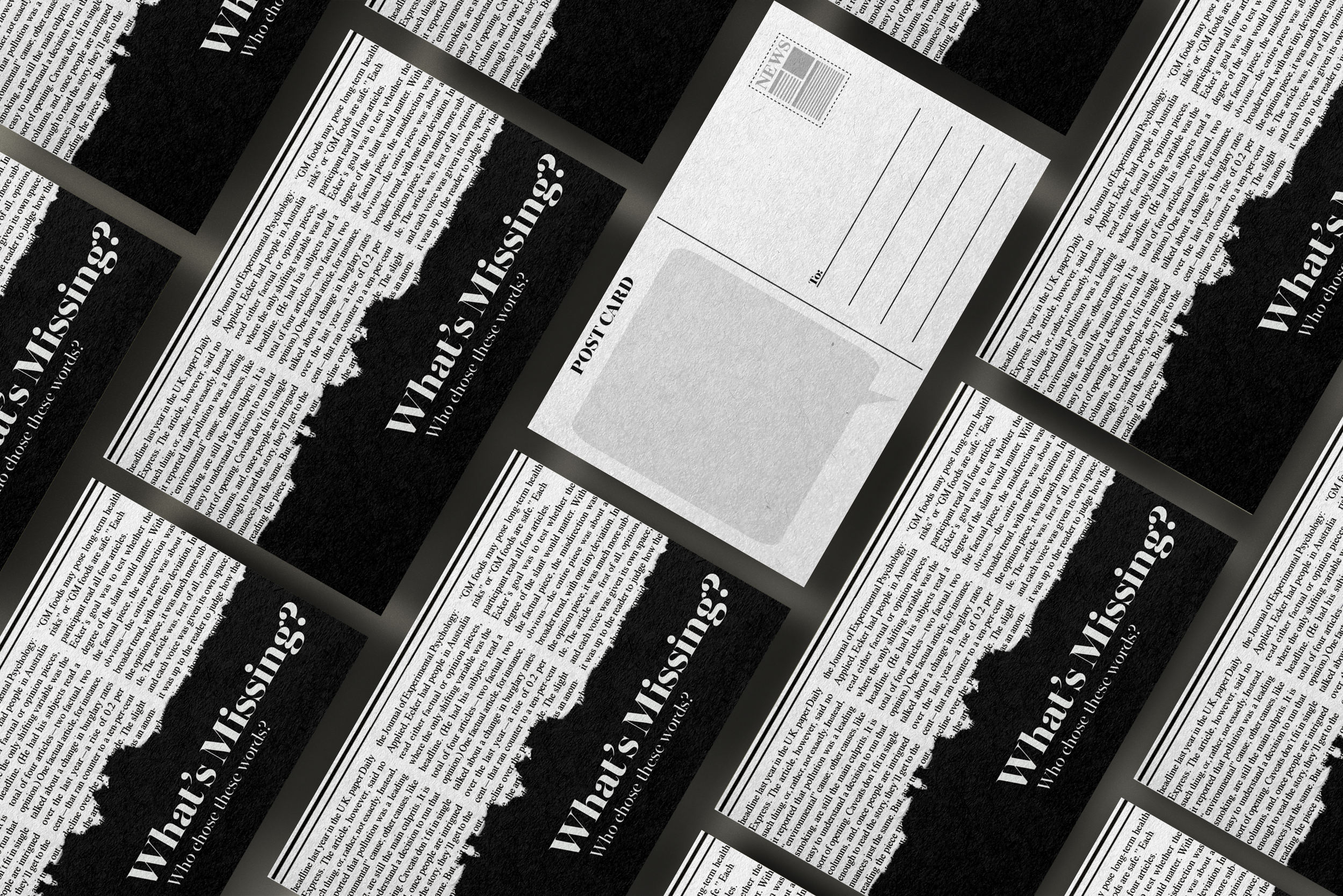
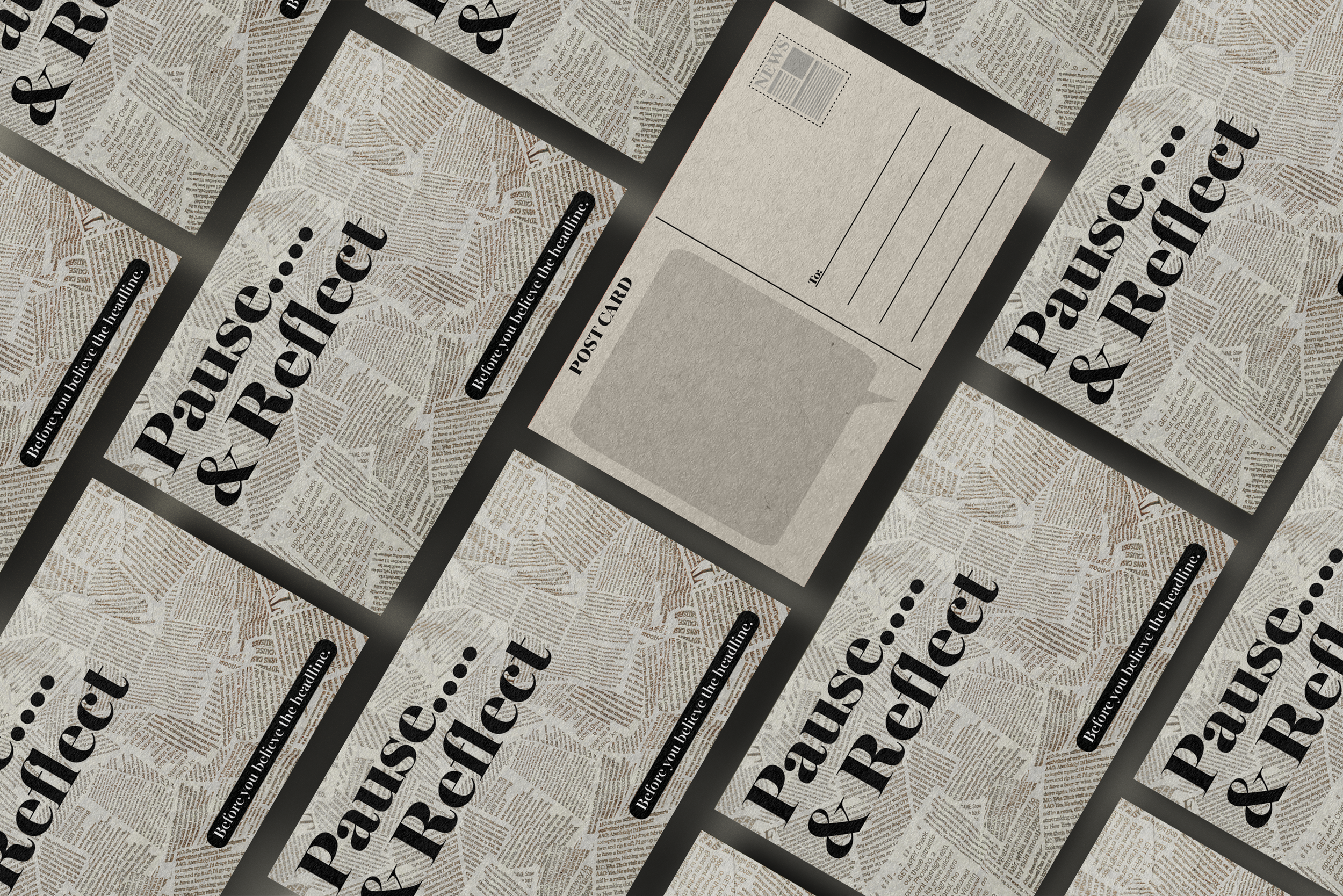
The postcard series translates my thesis into something the audience can hold, send, and keep. Formatted as traditional mail — complete with address lines and a stamp placeholder — each card carries a provocation drawn from the project's central questions about media, language, and trust.
The format is intentional. A postcard is personal, direct, and travels from one person to another — much like the way misinformation spreads. By pairing that familiar, intimate object with messages that challenge how we consume news, the series invites readers to pass critical thinking forward. In a media landscape defined by passive scrolling, the postcard asks you to stop, read slowly, and think before you share.
The Interactive Game
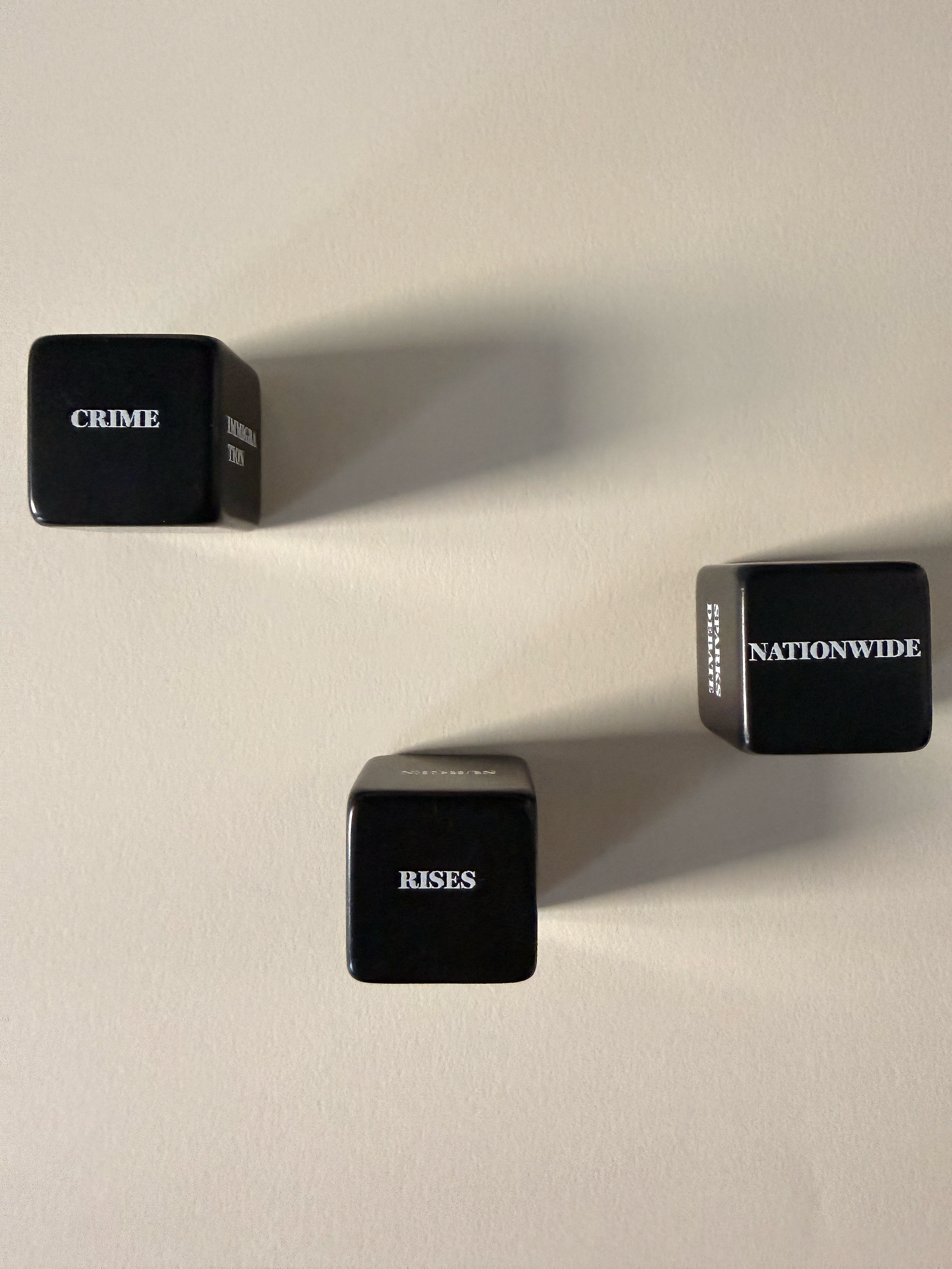
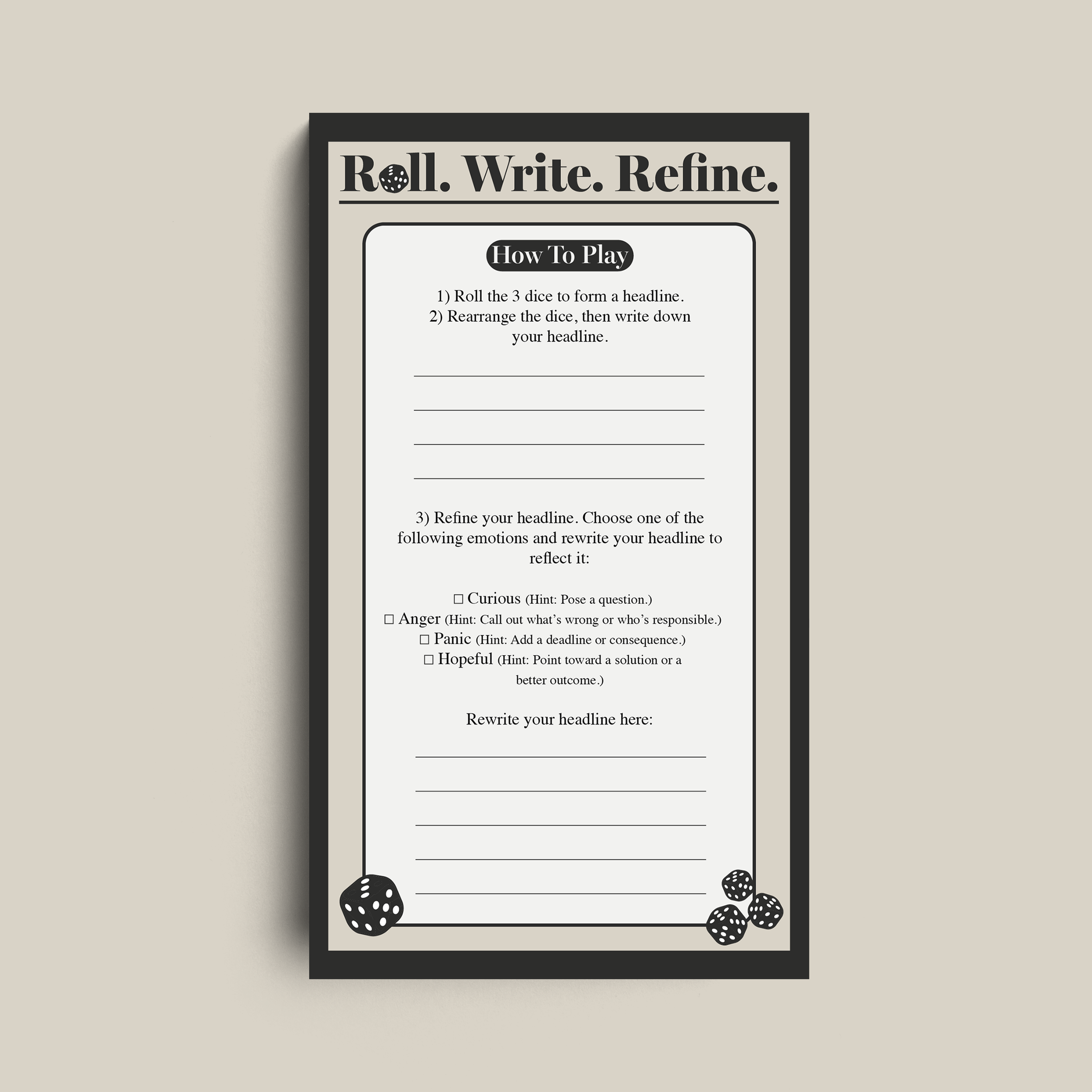
The interactive game translates my thesis into something the audience can hold, roll, and interrogate. Designed as a functional notepad paired with three six-sided dice - each face carrying a carefully selected word - the project puts the mechanics of headline construction directly in the hands of participants.
The format is intentional. A die carries six possible outcomes, and three dice together generate dozens of word combinations, mirroring the way media outlets engineer language with deliberate selection. By pairing that familiar, playful object with the serious business of headline framing, my project invites participants to feel how words shape meaning before a single fact gets checked.